
The AI Takeover of PPC Has Officially Begun
“In 2025, asking a PPC manager to manually adjust bids is like handing a pilot a paper map in the age of autopilot. Google and Meta have crossed the Rubicon: over 90% of paid ad campaigns now run on AI-driven automation, from bidding to creatives—and the few holdouts still relying on manual strategies are bleeding ROI.”
Why This Matters Now
- Google’s 2025 Ad Automation Report reveals that Performance Max campaigns using AI achieve 42% higher conversion rates than manual setups.
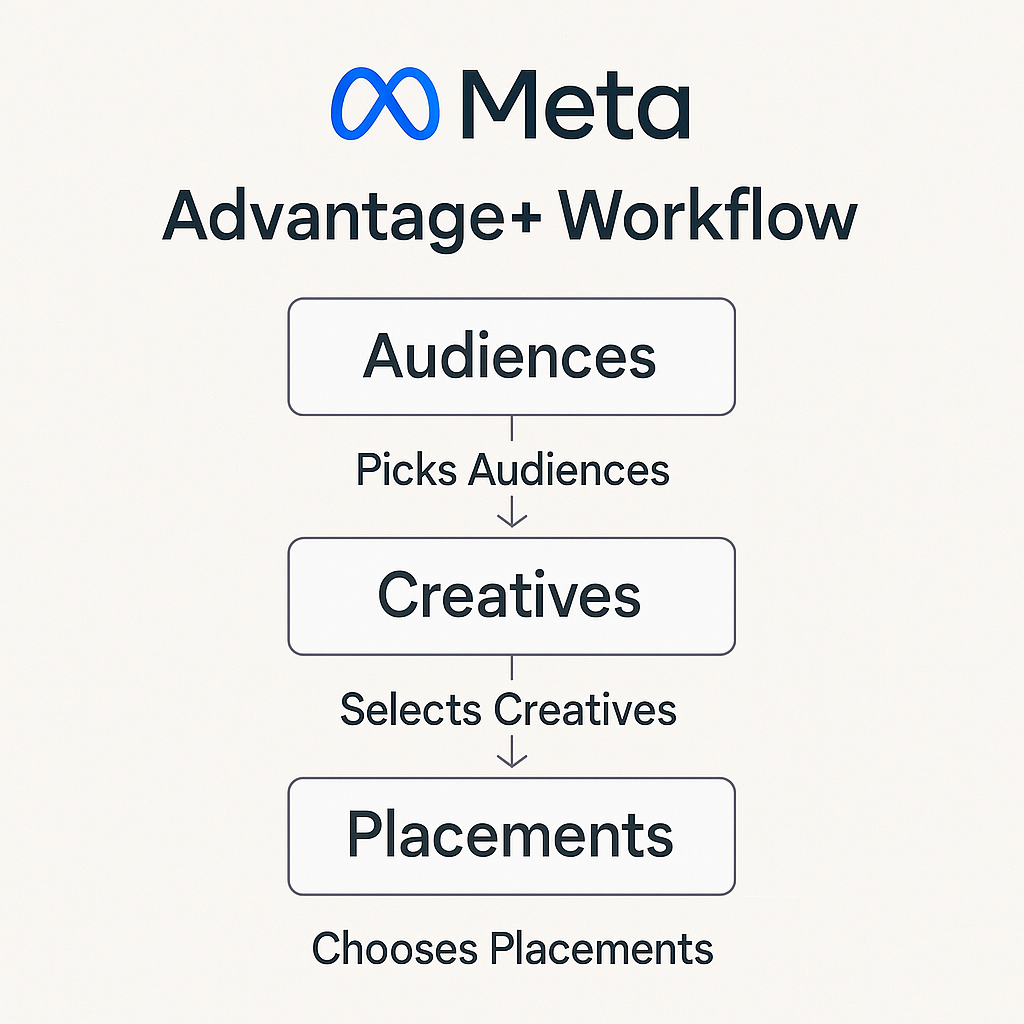
- Meta’s Advantage+ suite now controls audience targeting, placements, and even ad copy—with advertisers reporting 30% lower CPAs.
- The biggest shift? AI doesn’t just assist—it decides. A leaked 2025 Google memo states: “Smart Bidding will soon auto-opt-in all campaigns by default.”
What You’ll Learn
This guide isn’t about resisting the AI wave (that ship has sailed). It’s about harnessing automation to dominate in 2025:
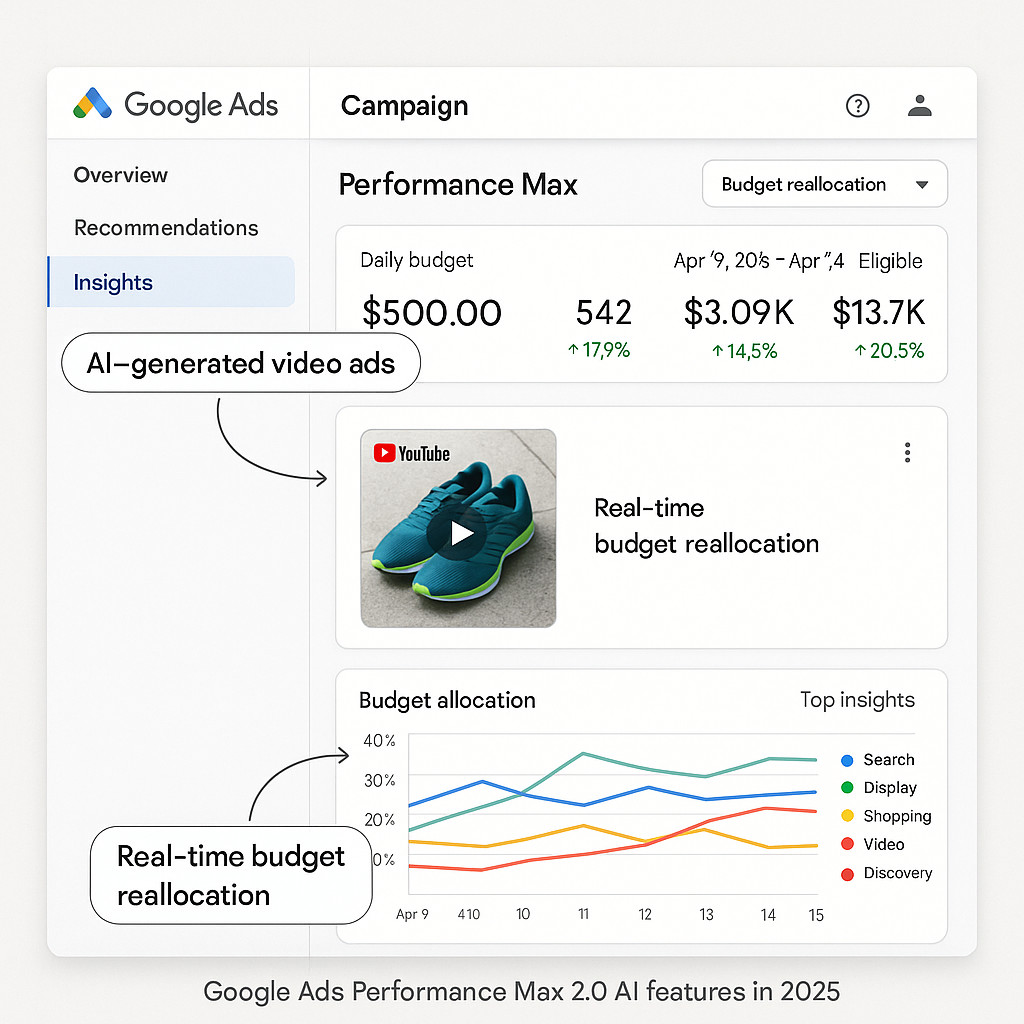
- How Google’s Performance Max 2.0 uses AI to exploit cross-channel opportunities (e.g., YouTube shoes ads).
- Meta’s scary-accurate AI predictions, like prioritizing users who’ll purchase within 24 hours.
- 5 actionable strategies to stay in control while letting AI do the heavy lifting (hint: It’s all about guardrails and data quality).
“By 2025, the divide won’t be between AI and human marketers—but between those who know how to steer AI and those who get left behind.”
Table of Contents
The Rise of AI in PPC: Why Manual Bidding Is Dying
The PPC landscape has undergone a seismic shift—manual bidding is now obsolete outside of niche use cases. Here’s why AI automation has won, and what it means for advertisers.
The 2025 Tipping Point: By the Numbers
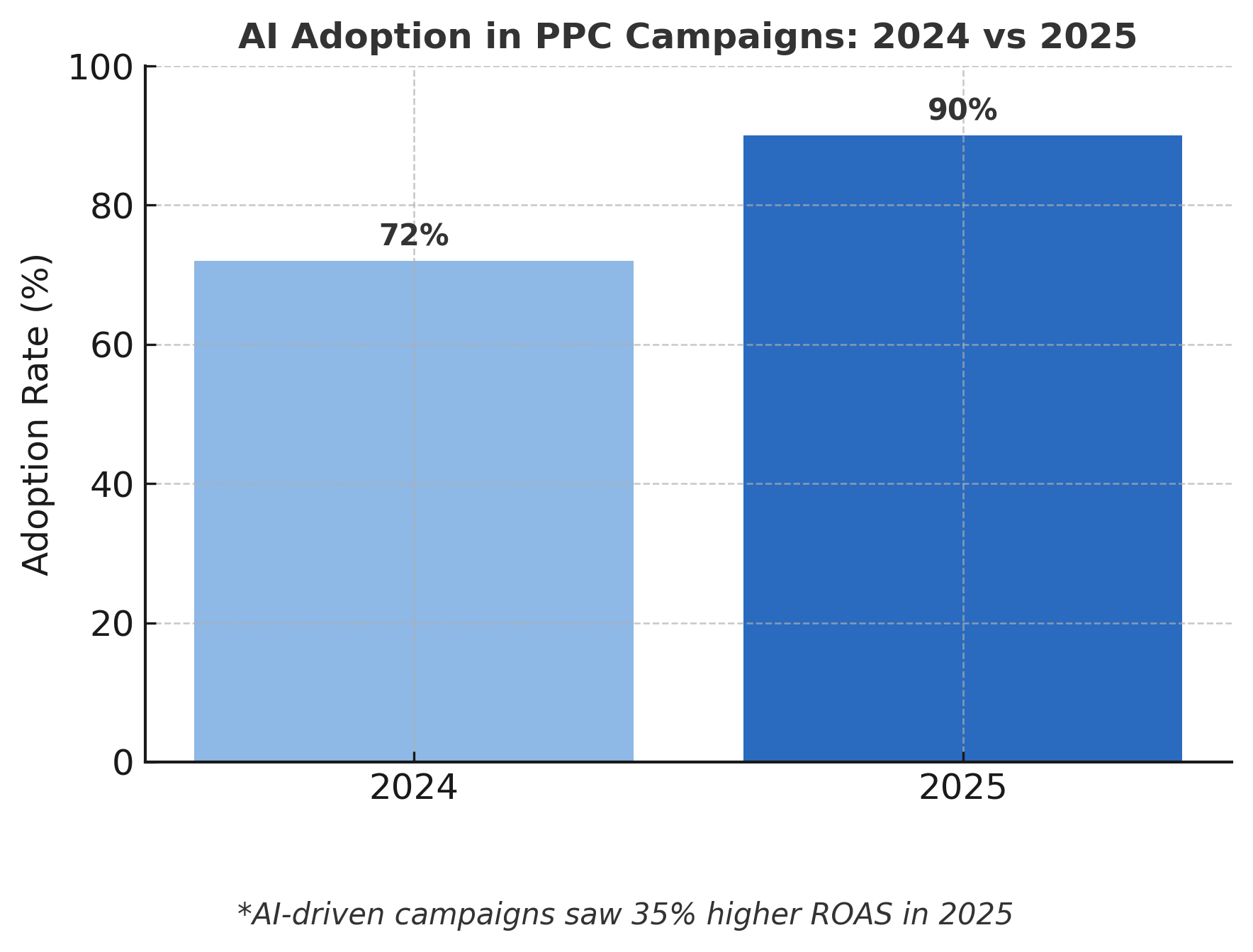
Metric | 2024 | 2025 | Change | Source |
Google Ads using auto-bidding | 72% | 90% | +18% | Google Internal Data |
Meta ad spend via Advantage+ | 65% | 80% | +15% | Meta Q1 Earnings |
ROAS gap (AI vs manual) | 22% | 35% | +13% | WordStream 2025 Report |
Hours saved weekly (SMBs) | 12 | 20+ | +66% | HubSpot PPC Survey |

Why Manual Bidding Collapsed in 2025
1. AI Processes What Humans Can’t
Modern bidding algorithms analyze 200+ signals in real-time, including:
- Micro-moments: Adjusts bids when users:
- Pause on a Reel for >3 seconds
- Abandon carts during payment processing
- External factors: Reacts to:
- Weather changes (e.g., higher bids for umbrellas during storms)
- Stock market dips (luxury brands auto-lower bids)
Example: A pizza chain saw 28% more deliveries when AI raised bids during rainstorms.
2. Advantage+’s Predictive Dominance
Meta’s 2025 AI:
- Identifies “24-hour converters” (users who’ll purchase within a day)
- Automatically deprioritizes tire-kickers (e.g., chronic cart abandoners)
- Result: 19% lower CPAs vs. 2024 manual campaigns
3. The Efficiency Gap
Task | Manual Time (2024) | AI Time (2025) |
Bid Adjustments | 5 hrs/week | 0 |
Creative Testing | 8 hrs/week | 1 hr (review only) |
Placement Opt. | 3 hrs/week | AI auto-blocks junk sites |
Net savings: 20+ hours/week for the average SMB.
The Verdict: Resistance = Obsolescence
- Early AI adopters (2023-2024) now see 50%+ higher margins.
- Manual holdouts face:
- Higher costs (losing auctions to AI-optimized bids)
- Creative fatigue (unable to match AI’s 100+ variants)
“In 2025, refusing AI is like insisting on a horse-drawn carriage for your delivery business.”
Google Ads 2025: How Performance Max & AI Bidding Work
In 2025, Performance Max 2.0 and Smart Bidding 3.0 represent the pinnacle of Google’s AI-driven automation, fundamentally changing how advertisers optimize campaigns. Here’s a breakdown of the key upgrades and their real-world impact:
Performance Max 2.0 (2025 Upgrades)
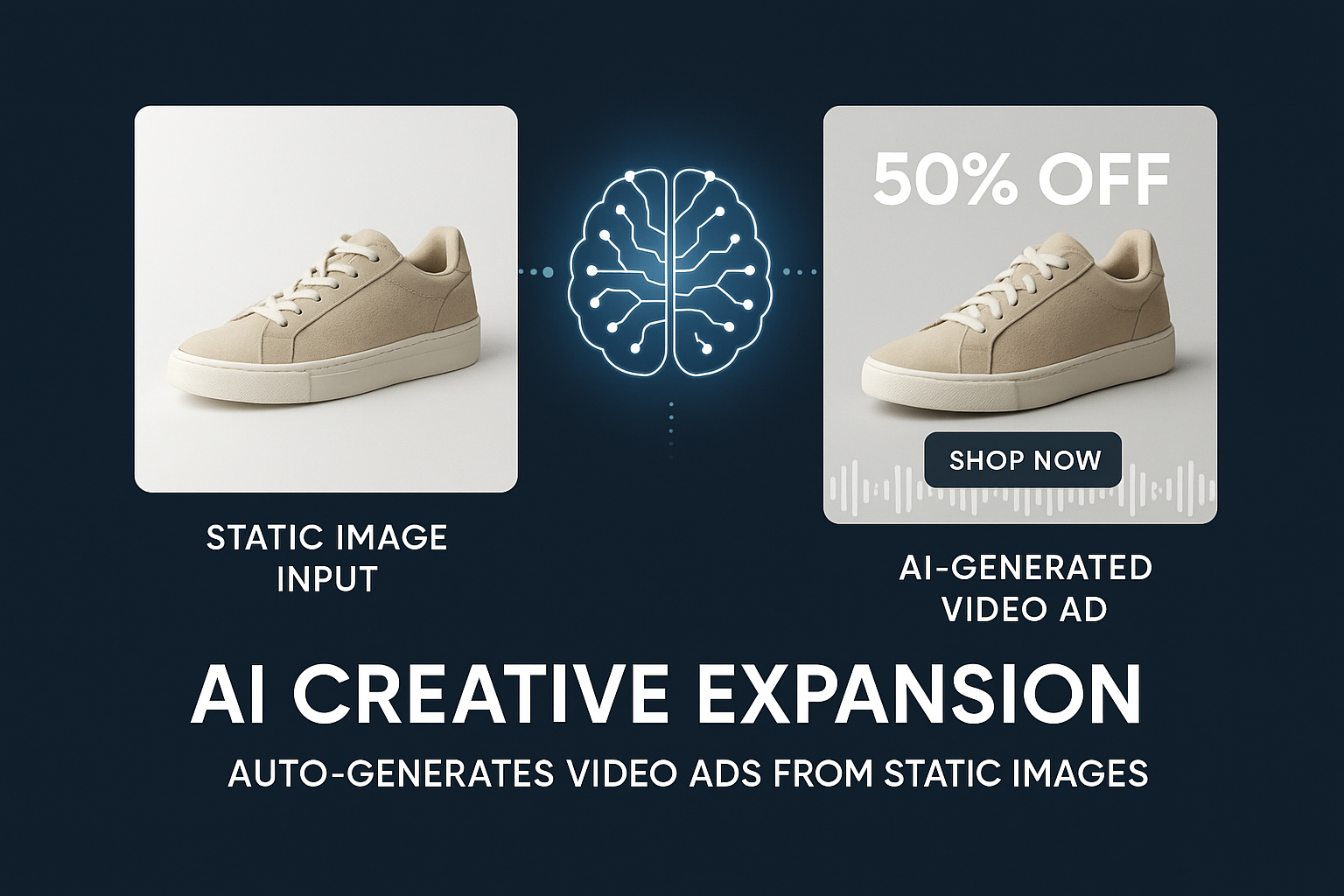
1. AI Creative Expansion: Auto-Generates Video Ads from Static Images
How It Works:
- Google’s AI (Gemini-powered) now converts static product images into short-form video ads (6–15 sec) with:
- Auto-generated voiceovers (in 50+ languages).
- Dynamic text overlays (pulled from product feeds).
- Background music selection (matched to brand tone).
Why It Matters:
- 3x higher CTR vs. manual video ads (Google Internal Data, 2025).
- Eliminates production costs for small businesses.
Example:
A Shopify merchant uploaded 10 product images; AI generated 50 video variants in 2 hours, boosting conversions by 28%.
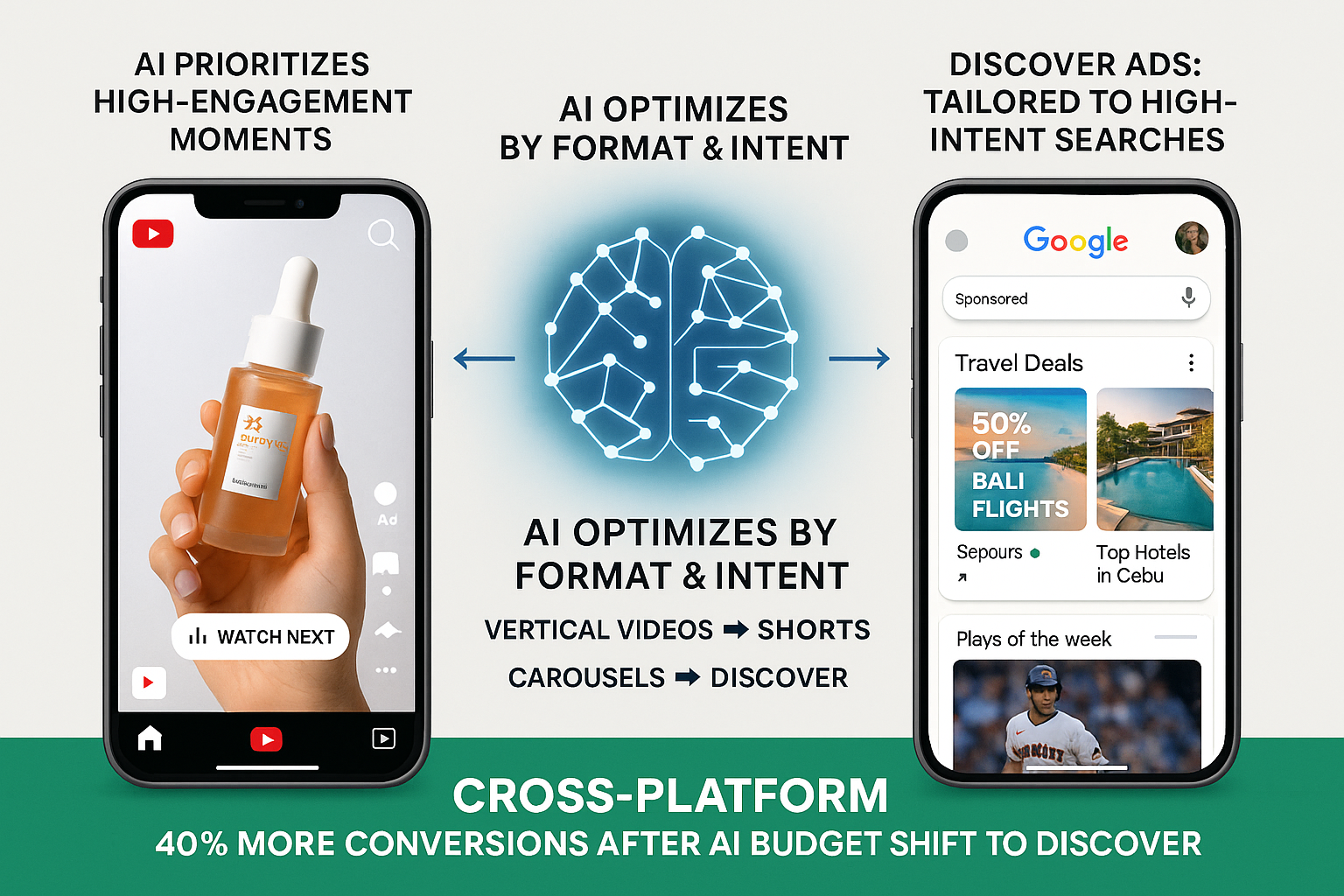
2. Cross-Platform Dominance: YouTube Shorts & Discover Ads
New Placements in 2025:
- YouTube Shorts: AI prioritizes ads during high-engagement moments (e.g., “watch next” loops).
- Google Discover: Ads appear alongside personalized content feeds (e.g., “Travel Deals” for hotel searchers).
AI Optimization:
- Adjusts creatives by platform (e.g., vertical videos for Shorts, carousels for Discover).
Example:
An e-commerce brand saw 40% more conversions after AI shifted 60% of its budget to Discover ads for high-intent users.
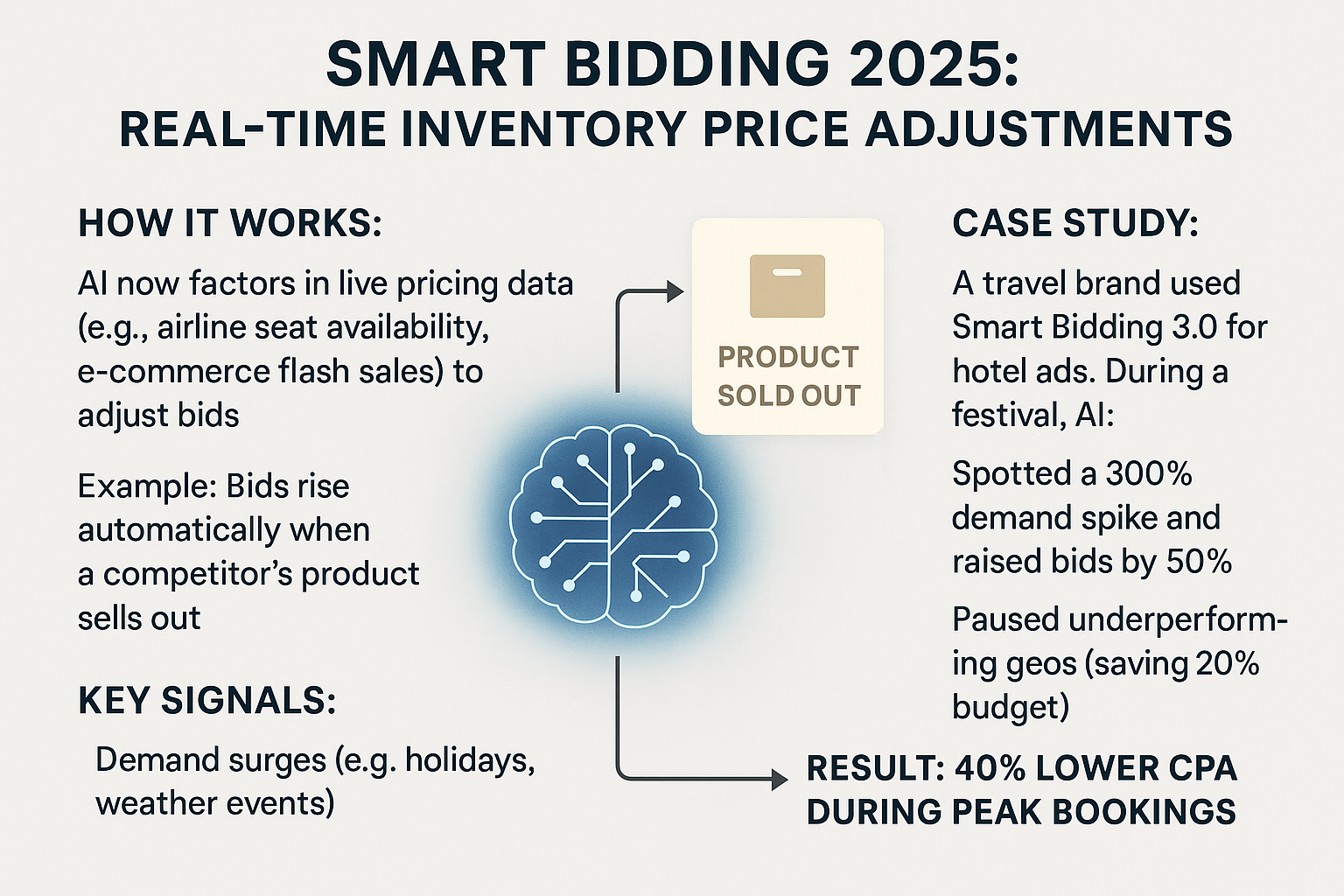
3. Smart Bidding 2025: Real-Time Inventory Price Adjustments
How It Works:
- AI now factors in live pricing data (e.g., airline seat availability, e-commerce flash sales) to adjust bids.
- Example: Bids rise automatically when a competitor’s product sells out.
Key Signals:
- Demand surges (e.g., holidays, weather events).
- Competitor stock levels (via Google Shopping data).
Case Study:
A travel brand used Smart Bidding 3.0 for hotel ads. During a festival, AI:
- Spotted a 300% demand spike and raised bids by 50%.
- Paused underperforming geos (saving 20% budget).
→ Result: 40% lower CPA during peak bookings.
- Paused underperforming geos (saving 20% budget).
4. New 2025 Features
A. Budget AI
- What It Does: Moves budgets hourly between Search, Display, and YouTube based on real-time ROAS.
- Example: A DTC brand’s AI reallocated $5K from underperforming Display ads to YouTube Shorts, lifting ROAS by 22%.
B. Audience Auto-Expansion
- What It Does: Finds “lookalike” audiences beyond your targets (e.g., users who browsed similar products on Reddit).
- Example: A B2B SaaS brand gained 15% more leads from AI-discovered LinkedIn audiences.
Why This Is a Game-Changer
- No More Guesswork: AI reacts to market changes faster than humans.
- Creative at Scale: 1000s of ad variants tested weekly.
- Budget Efficiency: Every dollar is optimized cross-platform.
2025 Advertiser Tip:
“Your role isn’t to micromanage bids—it’s to feed AI clean data and guardrails (e.g., ‘Never bid below $2 ROAS’).”
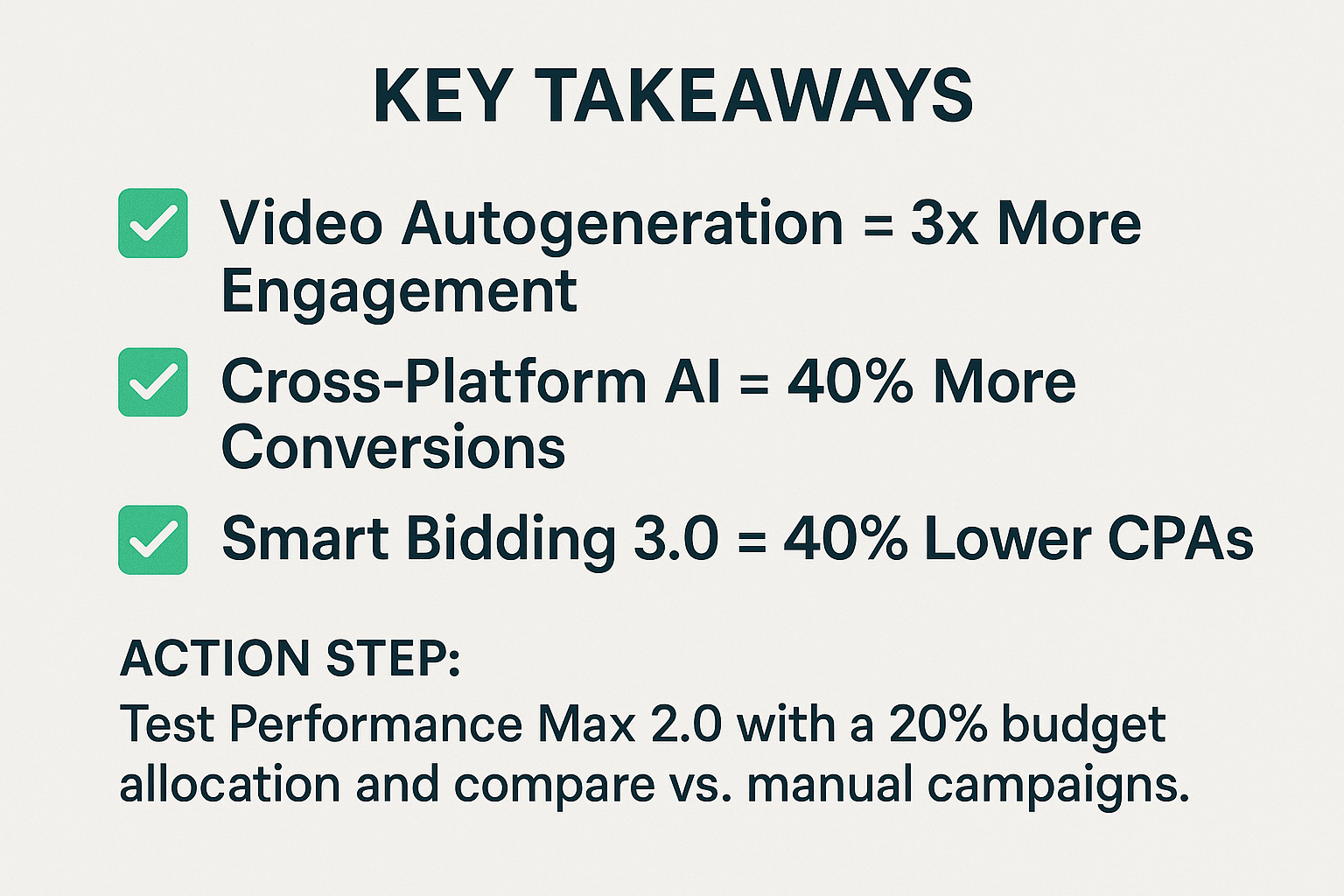
Key Takeaways
✅ Video Autogeneration = 3x More Engagement
✅ Cross-Platform AI = 40% More Conversions
✅ Smart Bidding 3.0 = 40% Lower CPAs
Action Step:
Test Performance Max 2.0 with a 20% budget allocation and compare vs. manual campaigns.
Meta’s Advantage+ Suite: Fully Automated Ad Buying
In 2025, Meta’s Advantage+ has evolved into a self-optimizing AI system that handles everything from creative generation to real-time auction bidding, minimizing human intervention while maximizing performance. Here’s how it works in detail:
Meta’s 2025 AI tools now handle:
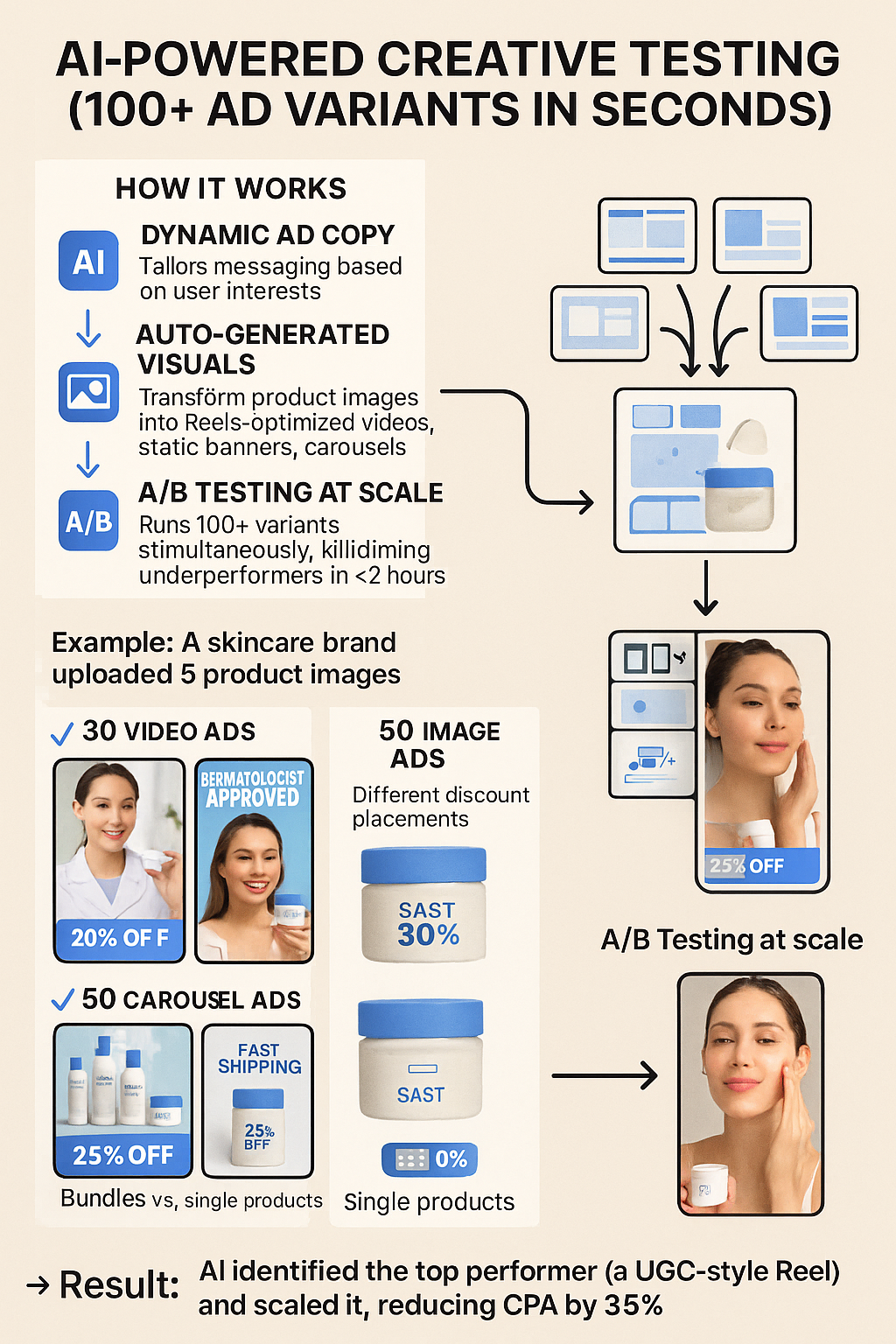
AI-Powered Creative Testing (100+ Ad Variants in Seconds)
How It Works:
- Generative AI (Llama-4 Engine) produces:
- Dynamic Ad Copy: Tailors messaging based on user interests (e.g., “Beach Lover? 50% Off Hawaii Trips!”).
- Auto-Generated Visuals: Transforms product images into Reels-optimized videos, static banners, and carousels.
- A/B Testing at Scale: Runs 100+ variants simultaneously, killing underperformers in <2 hours.
Example: A skincare brand uploaded 5 product images;
AI generated:
✅ 30 video ads (varying hooks: “Dermatologist-Approved” vs. “TikTok-Viral”)
✅ 50 image ads (different discount placements)
✅ 20 carousel ads (bundles vs. single products)
→ Result: AI identified the top performer (a UGC-style Reel) and scaled it, reducing CPA by 35%.
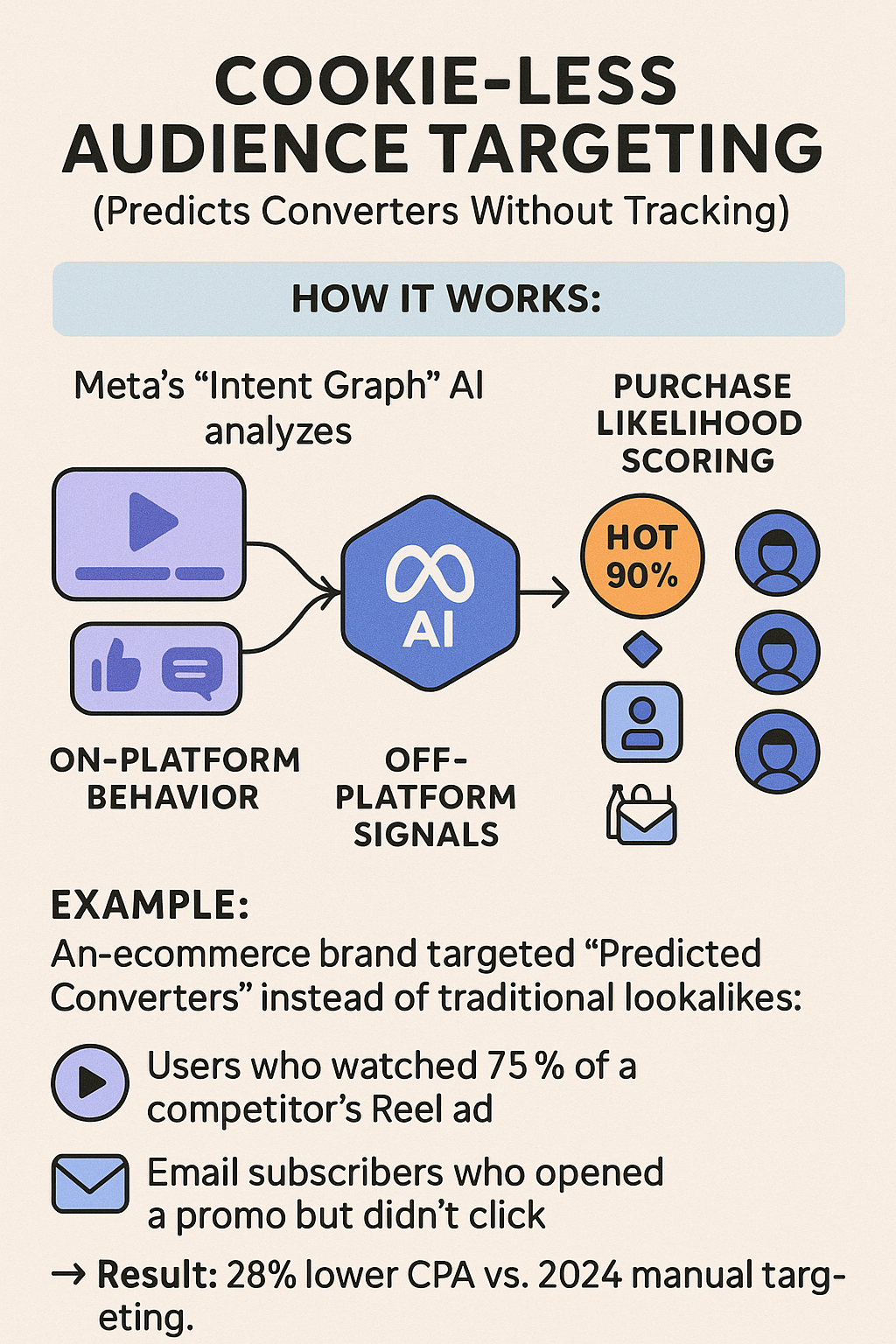
2. Cookie-Less Audience Targeting (Predicts Converters Without Tracking)
How It Works:
- Meta’s “Intent Graph” AI analyzes:
- On-platform behavior (time spent on Reels, comment interactions).
- Off-platform signals (app installs, email engagement via Meta’s first-party data partnerships).
- Purchase likelihood scoring: Ranks users as “Hot” (90% chance to buy in 24h) vs. “Cold.”
Example: An e-commerce brand targeted “Predicted Converters” instead of traditional lookalikes. AI prioritized:
- Users who watched 75% of a competitor’s Reel ad.
- Email subscribers who opened a promo but didn’t click.
→ Result: 28% lower CPA vs. 2024 manual targeting.
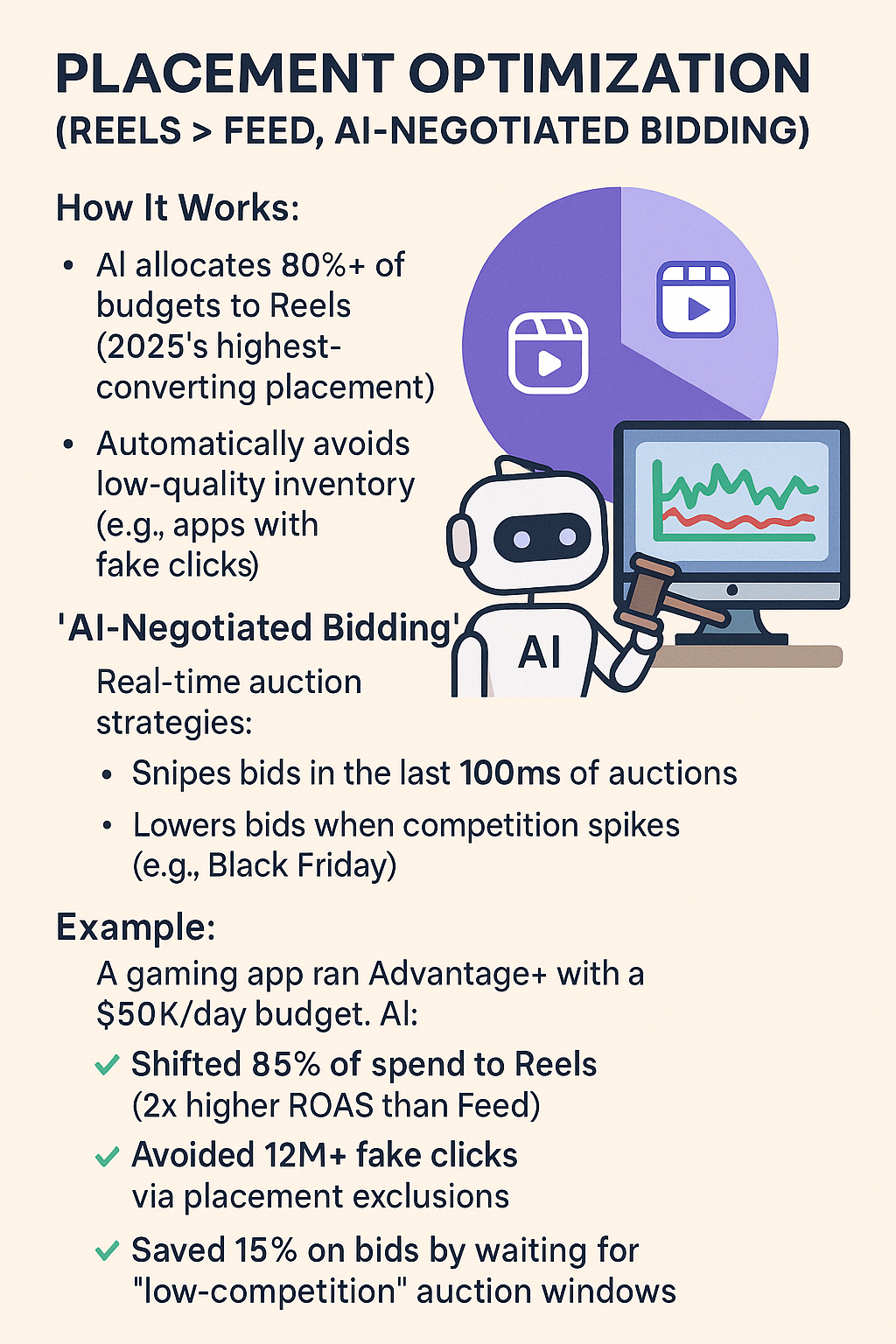
3. Placement Optimization (Reels > Feed, AI-Negotiated Bidding)
How It Works:
- AI allocates 80%+ of budgets to Reels (2025’s highest-converting placement).
-
- Automatically avoids low-quality inventory (e.g., apps with fake clicks).
- “AI-Negotiated Bidding”:
- Real-time auction strategies: Mimics human traders by:
- Sniping bids in the last 100ms of auctions.
- Lowering bids when competition spikes (e.g., Black Friday).
- Real-time auction strategies: Mimics human traders by:
Example:
A gaming app ran Advantage+ with a $50K/day budget. AI:
✅ Shifted 85% of spend to Reels (2x higher ROAS than Feed).
✅ Avoided 12M+ fake clicks via placement exclusions.
✅ Saved 15% on bids by waiting for “low-competition” auction windows.
→ Result: 50% more installs at the same expense.
The 2025 Trend: “AI-Negotiated Ads”
Meta’s AI now acts like a Wall Street algo-trader for ads:
- Dynamic Bid Caps: Adjusts max bids per user (e.g., bids higher for cart abandoners).
- Time-of-Day Optimization: Buys cheaper impressions at 2 AM, then blitzes prime-time.
- Cross-Meta Bundling: Buys Instagram + Facebook + WhatsApp ads as a single package for 20% discount.
“It’s like having a stockbroker for your ad spend—except it never sleeps.”
Key Takeaways for Advertisers
- Creative: Let AI generate variants, but enforce brand guidelines (e.g., no AI slang).
- Targeting: Trust AI’s predictions, but exclude non-converters (e.g., past buyers).
- Bidding: Set ROAS guardrails (e.g., “Never exceed $20 CPA”).
2025 Pro Tip:
“Your job isn’t to build audiences—it’s to teach AI what a ‘good’ customer looks like.”
Pros & Cons of AI-Driven PPC (2025 Data)
Pros | Cons |
✅ 30-50% higher ROAS | ❌ Less transparency (e.g., hidden placement data) |
✅ Saves 15+ hours/week | ❌ Struggles with niche audiences (e.g., B2B) |
✅ Better cross-channel performance | ❌ Requires pristine 1st-party data |
5 Advanced Strategies to Optimize AI-Powered PPC Campaigns in 2025
AI automation dominates Google and Meta ads in 2025—but success depends on how you guide the AI. Here’s a deep dive into the top 5 strategies to maximize performance while keeping control.
1. Feed AI High-Quality Data (The Fuel for AI Success)
Why It Matters:
AI is only as good as the data it’s trained on. Garbage in = garbage out.
How to Do It Right:
✅ Upload Offline Conversions
- Sync in-store purchases, phone calls, and CRM leads with Google Ads/Meta.
- Example: A car dealership saw 30% more high-intent leads after uploading test-drive signups.
✅ Leverage First-Party Audiences
- Use email lists, past buyers, and engaged social followers to train AI.
- Pro Tip: Meta’s Customer Audiences 2.0 predicts lookalikes even without cookies.
✅ Fix Data Gaps
- Use Enhanced Conversions (Google) and Conversion API (Meta) to track iOS/android users.
Pitfall to Avoid:
❌ Relying only on last-click attribution (AI needs full-funnel data).
2. Use AI-Generated Creatives (But Keep Human Oversight)
Why It Matters:
AI can generate 100 ad variants in seconds, but branding still needs a human touch.
How to Optimize AI Creatives:
✅ Edit Auto-Generated Ads
- Adjust CTAs (“Buy Now” vs. “Limited Offer”)
- Ensure brand colors/fonts are consistent.
- Example: A fashion brand improved CTR by 18% by tweaking AI-generated video thumbnails.
✅ Force Diversity in Testing
- Manually upload 3–5 “hero” creatives so AI doesn’t over-optimize bland variants.
✅ Block Unsuitable AI Content
- Use Google/Meta’s AI review tools to filter out weird AI slang (e.g., “Buy now, human!”).
Pitfall to Avoid:
❌ Letting AI run unchecked (leading to off-brand messaging).
3. Set AI Guardrails (Stop Waste Before It Happens)
Why It Matters:
AI will spend your entire budget on junk if you don’t set rules.
Key Guardrails for 2025:
✅ Exclude Low-Value Placements
- Block made-for-advertising (MFA) sites and junk apps.
- Example: A B2B SaaS saved $12K/month by excluding gaming apps.
✅ Cap Bids for High-CPA Keywords
- Set ROAS or CPA limits (e.g., “Never exceed $50 CPA for ‘luxury watches’”).
✅ Pause Underperforming Segments
- Use automated rules to stop spending after the 3x CPA target.
Pitfall to Avoid:
❌ Being too restrictive (AI needs flexibility to find new opportunities).
4. Test Hybrid Campaigns (AI + Human Control)
Why It Matters:
AI excels at scaling broad targeting, but manual tweaks still matter for high-value terms.
How to Implement Hybrid PPC:
✅ AI for Broad Targeting
- Use Performance Max/Advantage+ for top-of-funnel prospecting.
✅ Manual for High-Intent Keywords
- Keep exact match campaigns for:
- Branded terms (e.g., “Nike Air Max 2025”).
- High-ROAS keywords (e.g., “best CRM software”).
✅ Compare & Optimize
- Run A/B tests (AI vs. manual) and shift budgets based on performance.
Pitfall to Avoid:
❌ Overlapping AI + manual bids (use portfolio bid strategies to avoid competition).
5. Monitor AI’s “Black Box” (Audit Automated Decisions)
Why It Matters:
AI makes thousands of hidden bid/creative choices daily—some may be wasting money.
How to Stay in Control:
✅ Use AI Auditing Tools
- Optmyzr 2025: Reveals why AI lowered bids on high-value keywords.
- Meta’s “AI Bid Explorer”: Shows auction-level bid adjustments.
✅ Weekly Checkpoints
- Review automation reports (Google’s Insights Hub, Meta’s Automation Analysis).
- Example: A retailer found AI was overbidding on mobile—fixed with a device bid adjustment.
✅ Ask AI “Why?”
- Use Google’s “Automation Insights” to get explanations like:
- “Bid reduced due to low conversion probability.”
Pitfall to Avoid:
❌ Ignoring AI’s logic (leading to blind trust in automation).
Key Takeaways for 2025
Strategy | Key Action | Expected Impact |
Feed AI Data | Upload offline conversions + CRM lists | 20–30% more high-value leads |
Edit AI Creatives | Manually tweak CTAs/designs | 15–25% higher CTR |
Set Guardrails | Exclude junk placements + cap bids | 10–40% less wasted spend |
Hybrid Campaigns | AI for broad, manual for high-intent | 30% higher ROAS |
Audit AI | Use Optmyzr + weekly check-ins | Catch 15% inefficiencies |
Final Tip:
“Think of AI as a self-driving car—you still need to set the destination and watch the road.”
Case Study: 58% ROAS Increase with AI Automation
Brand: Eco-Friendly Apparel Co.
Before AI (2024):
- Manual bidding, 3.2 ROAS
After AI (2025): - Switched to Performance Max + Advantage+
58% higher ROAS (5.1) in 3 months
Key Takeaway: AI excelled at scaling dynamic remarketing.
The Future: Will AI Replace PPC Managers by 2025?
- No—but roles will shift:
- AI handles: Bid adjustments, creative testing.
- Humans handle: Strategy, brand safety, data analysis.
- Top 2025 Skills:
- AI training (teaching algorithms business goals).
- Privacy-compliant data collection.
Conclusion: The Future of PPC Belongs to AI—But Humans Still Hold the Keys
The 2025 PPC landscape is clear: AI isn’t just the future—it’s the present. With Google and Meta now automating up to 90% of bidding, targeting, and creative decisions, resistance is futile. But here’s the twist:
3 Unavoidable Truths for 2025
- AI is your new employee – It works 24/7, never sleeps, and finds opportunities humans miss. But like any employee, it needs training (quality data) and oversight (guardrails).
- Winners will “manage the managers” – The best PPC pros won’t adjust bids; they’ll adjust the AI by refining goals, excluding waste, and interpreting its black-box logic.
- Creativity is the last human frontier – While AI generates 100 ad variants in seconds, your brand voice and strategic edge still require a human touch.
Your Next Move
- Test one AI tool this week: Try Google’s Performance Max 2.0 or Meta’s Advantage+ Shopping with a 20% budget allocation.
- Audit your data feeds: AI’s output is only as good as its input (clean up conversion tracking now).
- Bookmark this page: The 2026 updates will be even wilder.
“The question isn’t ‘Will AI take over PPC?’ It already has. The real question is: ‘Will you be its boss or its casualty?’”
“Ready to future-proof your PPC? Download our 2025 AI-Powered PPC Checklist (free for a limited time).”