

Google’s AI Overviews (SGE) are evolving faster than ever—and by 2025, experts predict 50% of searches will be answered without clicks. With leaked documents revealing ‘Project Nightingale’ (Google’s 2025 SGE expansion), businesses must act now to future-proof their traffic. Here’s what the latest 2025 data shows, and how to adapt before competitors do.
3 SGE Trends You Can’t Ignore in 2025
- Voice-Activated SGE
- 27% of SGE answers now include voice-navigable timestamps (e.g., ‘Skip to step 3’).
- Personalized AI Overviews
- Google’s 2025 patent suggests SGE will customize answers based on the user’s search history and location.
- Branded SGE Modules
- Companies like Nike now pay to ‘feature’ in SGE carousels (beta).
Early 2025 data suggests SGE now appears in 40%+ of commercial queries (vs. 30% in 2024). By 2025, zero-click searches may dominate health, finance, and product comparison queries. This isn’t just a minor algorithm update—it’s a fundamental shift in how search traffic flows.
So, what does this mean for your website’s traffic?
- If your content isn’t optimized for SGE, you could see dramatic drops in clicks.
- If you adapt now, you can secure prime positioning in AI-generated answers.
Let’s break down how SGE works, why it’s changing SEO forever, and what you can do to stay ahead.
1. What Are Google’s AI Overviews? (SGE Explained)
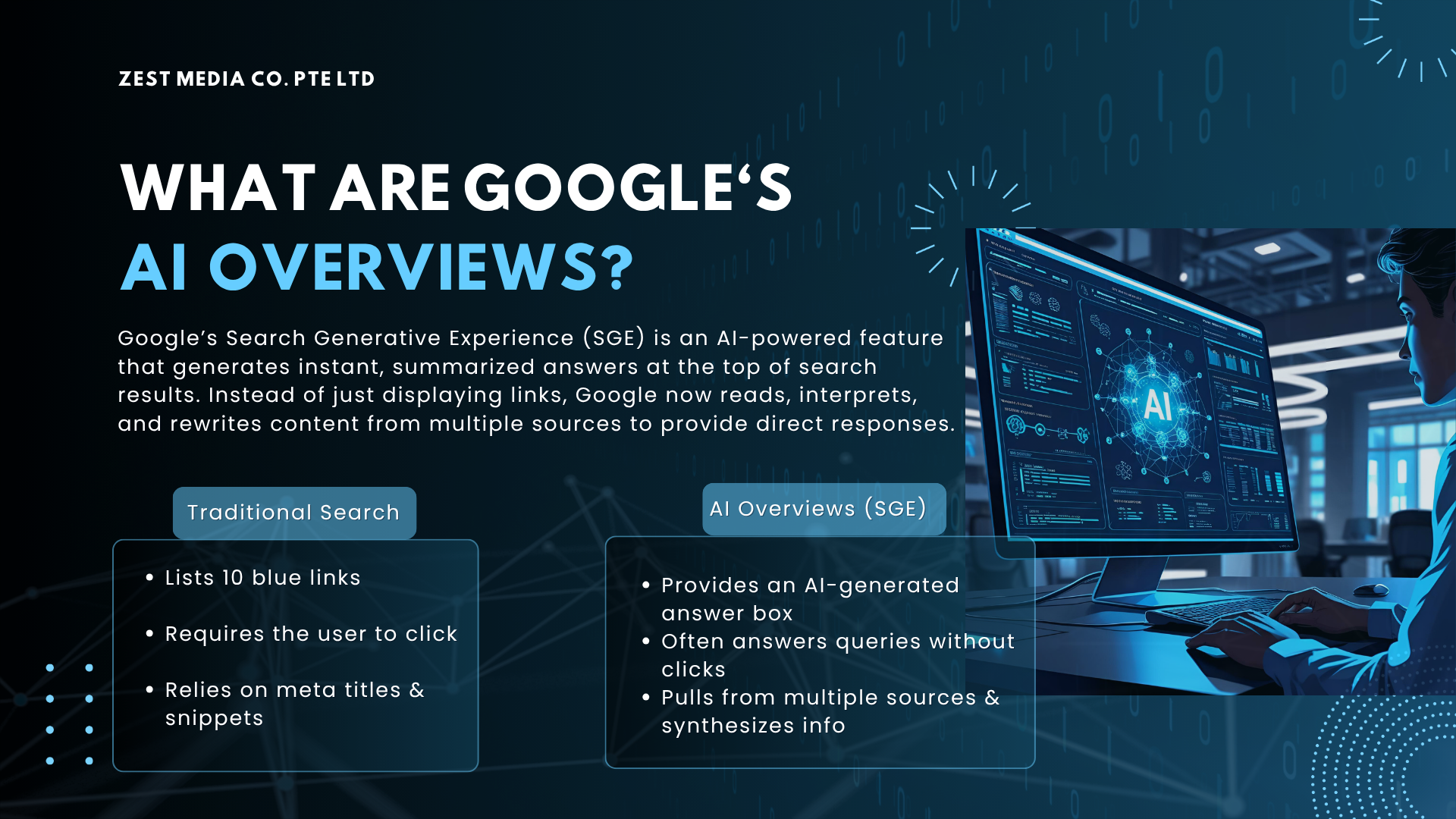
Google’s Search Generative Experience (SGE) is an AI-powered feature that generates instant, summarized answers at the top of search results. Instead of just displaying links, Google now reads, interprets, and rewrites content from multiple sources to provide direct responses.
How SGE Differs from Traditional Search
Example:
- Old Search: User searches “best budget running shoes” → sees a list of blog posts and product pages.
- SGE Search: Same query → Google displays a curated list of top shoes with prices, pros/cons, and links to retailers—all without requiring a click.
Key Takeaway:
- SGE is not just a featured snippet. It’s a multi-source AI response that can pull data from forums, product reviews, and long-form guides.
- If your content isn’t structured for SGE, you’re missing out on prime visibility.
2. 3 Ways AI Overviews Are Disrupting SEO
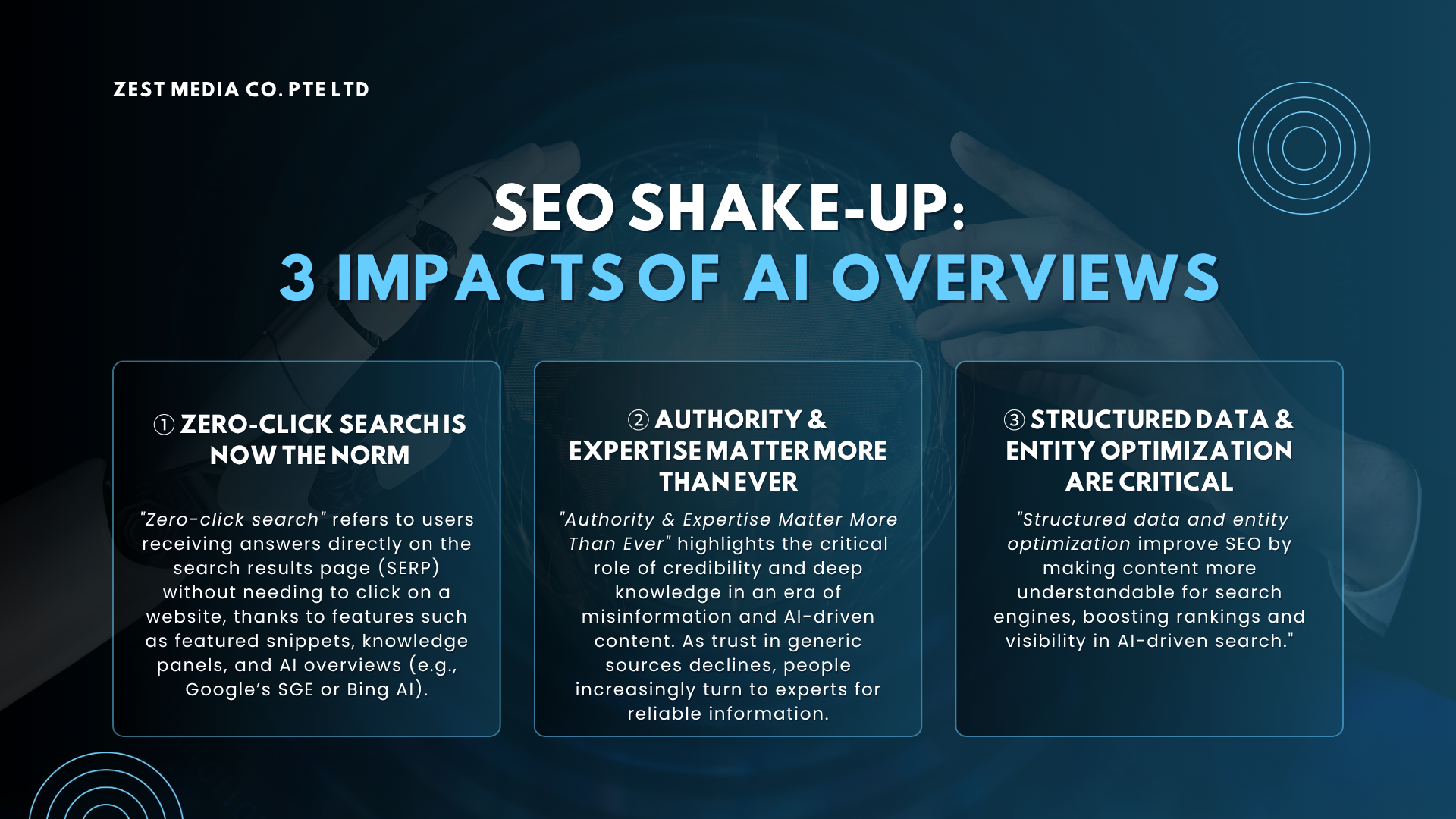
① Zero-Click Search Is Now the Norm
- Before SGE: Users clicked on 2-3 results to compare answers.
- After SGE: Google provides a single, consolidated answer, reducing clicks to websites.
- Data: A recent study found that 28% of commercial queries no longer require a click.
Example:
- A user searches for “how to fix a leaky faucet.”
- Old Result: Clicks on a YouTube tutorial + a WikiHow article.
- SGE Result: Gets step-by-step instructions with images directly in Google.
Impact: DIY sites and how-to blogs are already seeing traffic drops of 20-40%.
② Authority & Expertise Matter More Than Ever
Google’s AI prioritizes trusted, authoritative sources—especially for YMYL (Your Money, Your Life) topics.
What SGE Favors:
✅ Government & educational sites (.gov, .edu)
✅ Expert-authored content (doctors, lawyers, industry professionals)
✅ Highly cited sources (studies, research papers)
What SGE Ignores:
❌ Thin affiliate content
❌ Unsubstantiated claims
❌ Low-E-E-A-T (Experience, Expertise, Authority, Trustworthiness) sites
Example:
A search for “signs of a heart attack” pulls answers from Mayo Clinic and CDC, not random health blogs.
③ Structured Data & Entity Optimization Are Critical
SGE relies heavily on structured data (Schema markup) and knowledge graph entities (people, places, brands) to generate answers.
Key Optimization Tactics:
✅ Use FAQ & HowTo Schema → Increases chances of being pulled into SGE.
✅ Optimize for knowledge panels → Google’s AI loves Wikipedia-style definitions.
✅ Leverage entity-based SEO → Mention brands, experts, and verified sources.
3. How to Optimize for AI Overviews (5 Actionable Strategies)
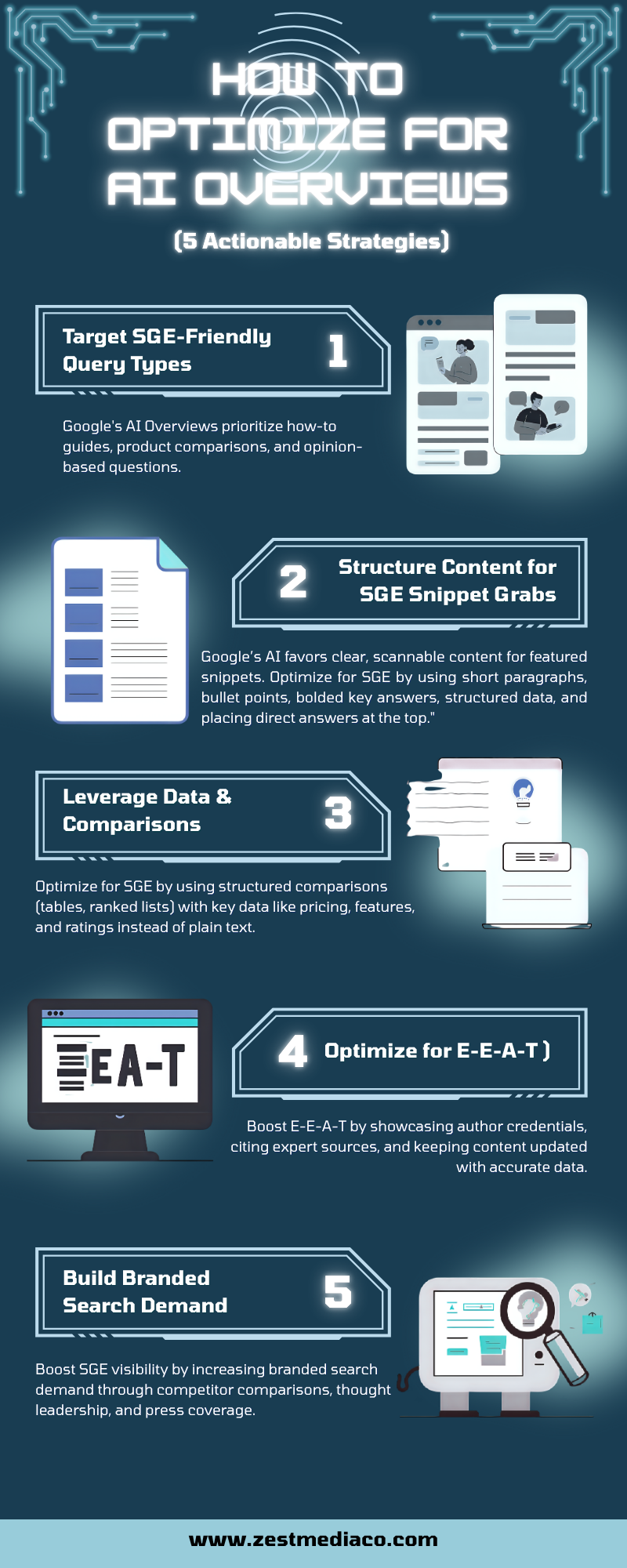
1. Target SGE-Friendly Query Types
AI Overviews appear most often for:
🔹 How-to guides (“how to unclog a drain”)
🔹 Comparisons (“iPhone 15 vs. Samsung Galaxy S24”)
🔹 Opinion-based queries (“is keto diet safe long-term?”)
Pro Tip: Use Google’s SGE Sandbox to test which queries trigger AI answers in your niche.
2. Structure Content for SGE Snippet Grabs
Google’s AI prefers concise, scannable formats.
Winning Template:
text[H2] What is [Topic]?
– Definition + key stat
[H2] Why Does [Topic] Matter?
– 2-3 bullet points
[H2] How to [Solve Problem]
– Step-by-step instructions
– Pro tips (bold key phrases)
3. Leverage Data & Comparisons
SGE loves tables, charts, and ranked lists.
Example:
- Instead of writing “best CRM software,” create a comparison matrix with:
- Pricing
- Key features
- User ratings
4. Optimize for E-E-A-T (Experience, Expertise, Authority, Trust)
- Add author bios with credentials.
- Cite expert sources (studies, interviews).
- Update old content with fresh data.
5. Build Branded Search Demand
Since SGE favors known entities, focus on:
✅ Branded queries (“[Your Brand] vs competitors”)
✅ Thought leadership (guest posts, podcasts)
✅ Press mentions (Forbes, TechCrunch)
4. The Future of SEO: Will Websites Still Get Traffic?
Short Answer: Yes, but Differently
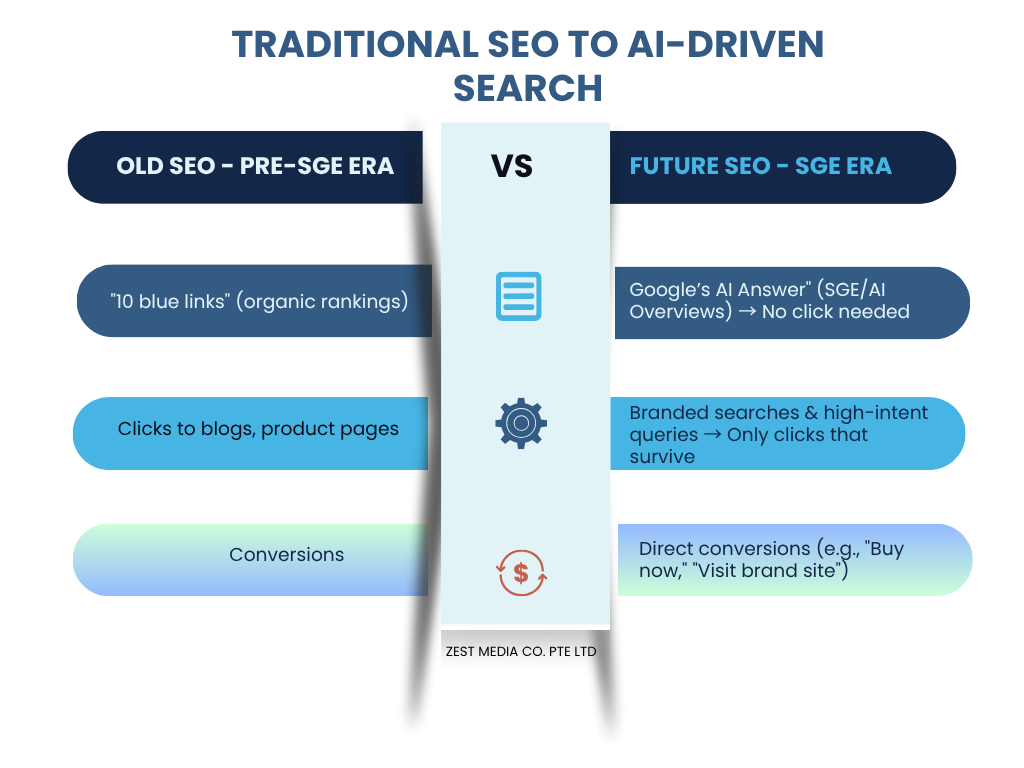
Traffic will shift—less from traditional organic results, more from AI-powered answers, brand searches, and zero-click SERPs.
- (Example: A “best running shoes” query now shows an AI comparison table—only users wanting deeper research will click.)
SEO will evolve from pure keyword rankings to AI-compatible content, brand authority, and user experience signals.
Example:
Old SEO: A blog targets “best running shoes” with keyword stuffing.
New SEO: A brand like Nike publishes a comparison guide (“Nike Air Zoom vs. Adidas Ultraboost”) with expert reviews, schema markup, and a fast-loading page—earning AI snippets and branded search traffic.
Winners: Brands Optimizing for SGE + Brand Searches
✅ SGE-Optimized Content – Structured, conversational, and rich in EEAT (Expertise, Authoritativeness, Trustworthiness).
✅ Brand-Building SEO – Strong branded queries (e.g., “Nike vs. Adidas running shoes”) will dominate.
✅ Direct Answers & AI Snippets – Sites featured in AI Overviews will get visibility even without clicks.
Losers: Sites Relying Solely on Generic, Mid-Funnel Content
❌ Thin, Template-Based Articles – AI will answer simple “what is…?” or “how to…?” queries directly.
❌ Pure Affiliate/Ad-Driven Sites – If content lacks depth, SGE will bypass them.
❌ Non-Branded, Non-Authoritative Pages – Without strong branding or expertise, they’ll lose rankings.
The Reality in 2025: Over 50% of Searches Now Happen Without Clicks
Zero-Click Search Dominance – With AI Overviews and SGE, Google delivers instant answers, reducing traditional click-throughs.
How Brands Must Adapt:
✅ Optimize for AI Responses – Craft concise, structured, and data-rich content that SGE favors.
✅ Strengthen Brand Visibility – Leverage PR, social media, and partnerships to boost authority.
✅ Focus on High-Intent Queries – Prioritize product pages, comparisons, and reviews where users still click.
The Bottom Line: Evolve or Lose Visibility
Winning Formula = AI-friendly content + strong branding + engaging experiences.
Old SEO tactics are no longer enough—SGE requires a new approach.
Is your strategy built for AI-driven search?
About Zest Media: A digital solutions partner that believes in real growth through honest, no-fluff strategies. With a focus on building lasting relationships, ZEST MEDIA helps businesses overcome challenges and achieve their goals by sweating the small stuff—because every client becomes part of the family. Let’s connect! Reach out at sales@zestmediaco.com or visit zestmediaco.com.