With the rise of AI Overviews, AI Mode, ChatGPT, Perplexity, Gemini, and other AI-powered search experiences, many businesses are asking the same question:
Is traditional SEO still relevant, or do businesses now need a completely separate AI SEO strategy?
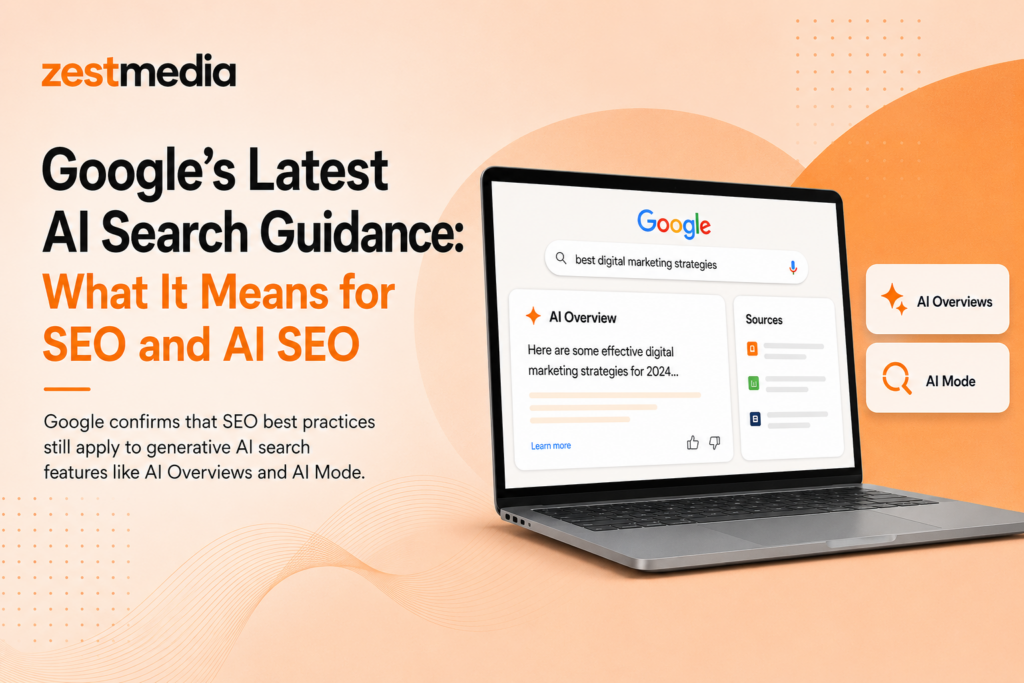
Google has now provided clearer guidance on this. Google explains that its existing SEO best practices will continue to apply to AI-powered search experiences within Google Search, including AI Overviews and AI Mode. See Google’s official guidance here: Google Search AI Optimization Guide.
According to Google Search Central, SEO best practices continue to be relevant for generative AI features in Google Search because these AI features are still connected to Google’s core Search ranking and quality systems. Google also states that from its perspective, terms like AEO, or Answer Engine Optimization, and GEO, or Generative Engine Optimization, are still part of optimizing for the broader search experience — meaning they are still part of SEO.
In simple terms: AI search optimization is not replacing SEO. It is extending the importance of strong SEO fundamentals.
This is also why AI SEO services should build on existing SEO foundations rather than replace them with isolated AI-only tactics.
It is also important to understand that this guidance specifically relates to Google Search and Google’s AI-powered search features only. Other AI platforms, such as ChatGPT, Gemini, Perplexity, Claude and Microsoft Copilot may use different systems, retrieval methods, and ranking approaches.
As businesses adapt to AI-powered search, investing in strong SEO services remains important for maintaining visibility across both traditional Google Search and AI-driven search features.
What Changed?
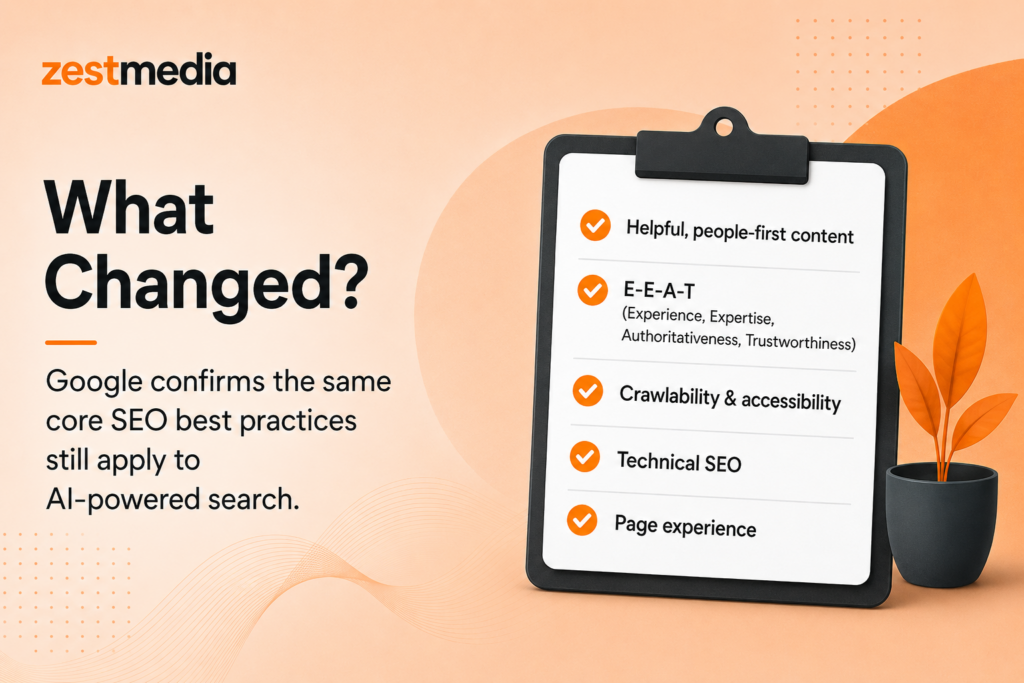
Google has published official guidance on how website owners can optimize for generative AI features in Google Search, such as AI Overviews and AI Mode. The guidance confirms that websites still need to focus on the same core areas that have always mattered in SEO: useful, people-first content supporting E-E-A-T (Experience, Expertise, Authoritativeness, Trustworthiness), crawlability, technical accessibility and page experience. .
This is important because there has been a lot of discussion online suggesting that businesses now need completely new tactics to appear in AI search results. Some discussions have focused heavily on tactics such as,
- Creating special llms.txt files
- Writing content only for AI bots
- Overusing schema markup
- Creating large volumes of question-based pages
- Chasing fake brand mentions
- Rewriting content into overly simplified AI-style chunks
Google’s guidance suggests that these shortcuts alone should not be treated as a replacement for strong SEO foundations,instead businesses should continue building genuinely helpful, crawlable, well-structured, and reliable content.
Google’s Stance: SEO Is Still Relevant
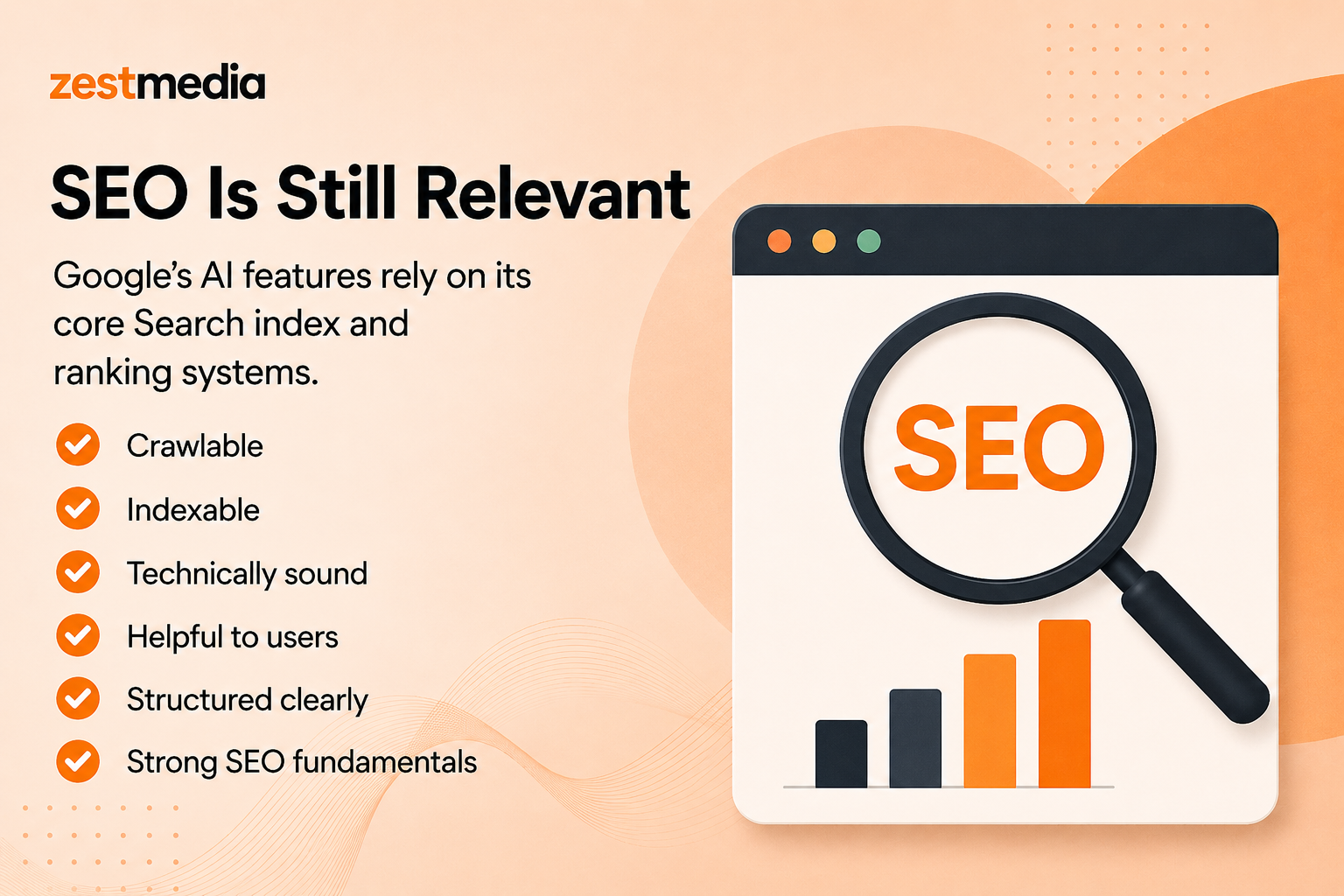
Google directly confirms that SEO is still relevant for generative AI search. Its AI features use systems such as retrieval-augmented generation and query fan-out, which rely on Google’s Search index and ranking systems to find relevant, useful, and up-to-date content.
This means that for a website to have a chance of appearing in Google’s AI-powered search experiences, it still needs to be:
- Crawlable
- Indexable
- Technically sound
- Helpful to users
- Structured clearly
- Supported by strong SEO fundamentals
So, while the search interface is changing, the foundation remains the same.

What About AEO and GEO?
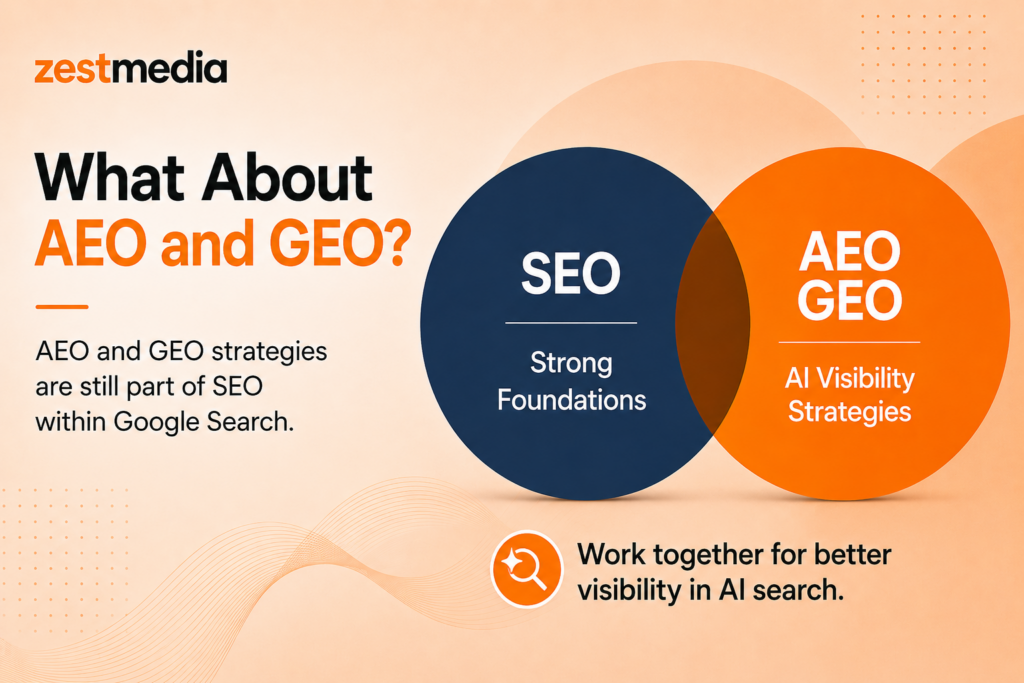
AEO stands for Answer Engine Optimization, while GEO stands for Generative Engine Optimization. These terms are commonly used to describe strategies focused on improving visibility in AI-generated answers.
Google’s position is that, within Google Search, optimization for AI-powered search experiences still falls under the broader practice of SEO because these features continue to rely on Google Search systems and quality signals.
This does not mean AI visibility should be ignored. It means businesses should avoid treating AI SEO as a completely separate, stand alone or shortcut-based discipline.
A better way to view it is:
Traditional SEO builds the foundation. AI SEO expands how that foundation may be surfaced in modern search experiences.
Common AI SEO Noise vs. Google’s Actual Guidance
Industry Noise | Google-Aligned Perspective |
“SEO is dead because of AI.” | SEO is still relevant because Google’s AI features rely on Search ranking and quality systems. |
“You need a separate AI SEO strategy.” | AI search optimization should be built on SEO fundamentals. |
“You need special files like llms.txt.” | Google’s guidance continues to emphasize crawlability, indexability, and standard SEO best practices rather than relying solely on any single file or tactic. |
“Write content specifically for AI bots.” | Google recommends creating helpful, reliable, people-first content that provides genuine value. |
“Publish many pages for every possible AI query.” | Google warns against creating excessive content primarily to manipulate rankings or AI responses. |
“Schema alone can get you into AI results.” | Structured data can support search appearance, but it is not a replacement for helpful content and technical SEO. |
“AI SEO is only about mentions.” | Brand authority and mentions can help, but they need to be authentic and supported by strong content and reputation. |
How This Aligns With Our SEO Methodology
Our SEO methodology remains highly relevant because it already aligns closely with the core areas Google continues to emphasize across both traditional and AI-powered search experiences.
1. Helpful, People-First Content
Google highlights the importance of unique, useful, and non-commodity (genuinely valuable) content. This means content should not simply repeat what already exists online. It should provide original insights, useful explanations, practical examples, and clear answers based on real expertise.
This aligns with our content strategy, where we focus on:
- Search intent
- Topic relevance
- Clear content structure
- Useful explanations
- Client-specific insights
- Internal linking
- Content freshness
For AI search, this matters even more relevant because these systems often look for information that is clear, reliable, well-structured, and easy to understand.
2. Technical SEO and Crawlability
Google states that the way Search finds and processes pages remains central to how its AI systems access information. Pages need to be crawlable, indexable, and eligible to appear in Google Search.
This supports our technical SEO work, including:
- Indexability checks
- Sitemap review
- Robots.txt review
- Canonical tag checks
- Internal linking structure
- Page speed and Core Web Vitals
- JavaScript SEO checks
- Duplicate content reduction
Without strong technical SEO, even high-quality content may struggle to be properly discovered,understood or indexed by Google.
3. Content Structure and Readability
Google recommends organizing content clearly, using headings, sections, paragraphs and logical page structures that improve readability and understanding. This supports our existing approach of creating content that is:
- Easy to scan
- Properly formatted
- Structured with headings
- Supported by FAQs where useful
- Written for users first
- Optimized naturally for search intent
This is beneficial for both traditional SEO and AI search because clear structure helps both users and search systems understand the content.
This is where SEO content writing helps ensure the page is useful for readers while remaining clear and understandable for search systems.
4. Authority and Trust
AI search does not remove the need for credibility. If anything, AI-powered search experiences still rely heavily on signals of credibility, trustworthiness, and authentic authority. . Businesses should continue building authority through strong website content, legitimate brand mentions, quality backlinks, reviews, case studies, and consistent online presence.
This supports our off-page and authority-building work, including:
- Digital PR
- Local citations
- Google Business Profile optimization
- Review generation
- Link earning
- Brand visibility
- Thought leadership content
The key point is that authority should be built naturally through genuine expertise, reputation, and user trust,, not artificially manufactured.
5. Multimedia and User Experience
Google also notes that images and videos can support content visibility in generative AI search experiences, especially when they are relevant and high quality.
This supports our recommendation to improve:
- Image SEO
- Video content
- Page layout
- Mobile experience
- Visual examples
- Conversion-focused design
- Overall page experience
AI- powered search may change how users discover websites, but once users click through, the website still needs to provide a useful and trustworthy experience.
Strong website design and development also supports AI search visibility by improving page layout, mobile experience, site speed, and overall usability.
What Businesses Should Do Moving Forward
Businesses do not need to panic or abandon traditional SEO. Instead, they should continue investing in a stronger SEO foundation while adapting content to be more useful, clear, and authoritative.
Recommended actions include:
- Continue improving technical SEO so Google can crawl and index the website properly.
- Create helpful, original content that answers real customer questions.
- Strengthen topical authority by covering important topics in depth.
- Keep content updated and accurate.
- Improve internal linking so related pages support each other.
- Build authentic brand authority through quality mentions, reviews, and backlinks.
- Use schema markup where relevant, but do not rely on it as a shortcut.
- Avoid mass-producing thin or low-value AI-generated content. Improve page experience, mobile usability, and site speed.
- Monitor both traditional SEO performance and AI search visibility where possible.
Our Position
Our position is simple:
AI search is changing how users discover information, but it does not remove the value of SEO.
Google’s own guidance confirms that the core principles of SEO still apply to generative AI search in Google.
Businesses that already invest in strong content, technical SEO, authority, and user experience are better positioned for both traditional search and AI-powered search features.
Rather than chasing short-term AI SEO hacks, a sustainable strategy is the way forward:
Build a technically sound website, publish genuinely useful content, strengthen authority, and make the website easy for both users and search engines to understand.
That is still the most sustainable and reliable foundation for long-term visibility across traditional Google Search, AI Overviews, AI Mode, and evolving future search experiences.